
The RTU vs RTS Decision: A Critical Choice for 503A Pharmacies
As 503A compounding pharmacies face increasing regulatory scrutiny under revised USP <797>, the choice between Ready-to-Use (RTU) and Ready-to-Sterilize (RTS) packaging components has become a strategic decision that impacts compliance, workflow efficiency, and operating costs.
Definitions
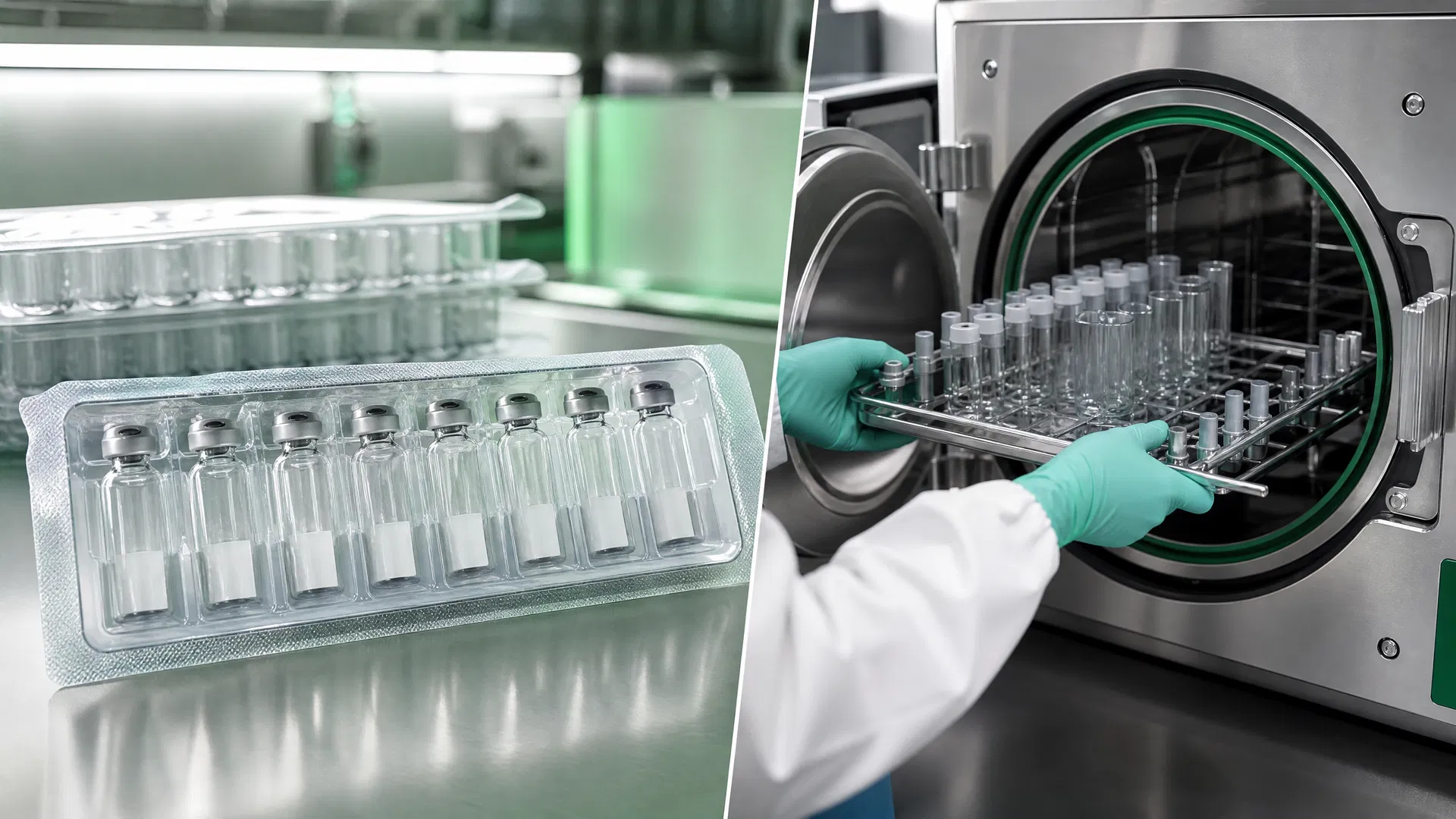
Ready-to-Use (RTU): Components that arrive pre-washed, depyrogenated, and sterilized in their final packaging. They can be used directly in aseptic processing without additional preparation.
Ready-to-Sterilize (RTS): Components that arrive pre-washed and depyrogenated but require terminal sterilization (typically autoclaving) at the pharmacy before use in aseptic operations.
Comparative Analysis
Sterility Assurance
| Factor | RTU | RTS |
|---|---|---|
| Sterilization method | Gamma irradiation or EtO at manufacturer | Autoclave at pharmacy |
| SAL (Sterility Assurance Level) | 10⁻⁶ (validated by manufacturer) | Depends on pharmacy's autoclave validation |
| Particulate levels | Controlled, certified | Depends on washing process |
| Documentation | Full COA provided | Pharmacy must validate |
Workflow Impact
RTU Advantages:
- Eliminates washing, depyrogenation, and sterilization steps
- Reduces cleanroom time by 2–4 hours per batch
- Minimizes human touchpoints (fewer contamination opportunities)
- Simplifies training requirements for technicians
- Reduces equipment maintenance (no autoclave cycles for components)
RTS Advantages:
- Lower per-unit cost (typically 30–50% less than RTU)
- Flexibility to sterilize on-demand
- No concerns about radiation-sensitive materials
- Longer shelf life before sterilization
Regulatory Considerations Under USP <797>
The revised USP <797> chapter emphasizes:
- Environmental monitoring — RTU components reduce the number of activities performed in the cleanroom, potentially improving environmental monitoring results
- Personnel competency — Fewer processing steps means fewer opportunities for human error
- Documentation requirements — RTU shifts the validation burden to the manufacturer, simplifying your quality system
- Beyond-use dating (BUD) — Both RTU and RTS components must be used within their validated shelf life
Cost Analysis
While RTU components cost more per unit, the total cost of ownership often favors RTU when you factor in:
- Labor costs for washing, inspection, and sterilization
- Equipment costs for washers, depyrogenation ovens, and autoclaves
- Utility costs for WFI generation and steam
- Quality costs for validation, monitoring, and documentation
- Risk costs associated with contamination events
For a typical 503A pharmacy processing 50–100 vials per day, the breakeven point often favors RTU when labor costs exceed $25/hour.
Making the Right Choice
Choose RTU when:
- Your pharmacy has limited cleanroom space
- You compound Category 2 CSPs requiring extended BUDs
- Your volume is moderate (< 500 units/day)
- You want to minimize regulatory risk
- Staff training and turnover are concerns
Choose RTS when:
- You have validated washing and sterilization equipment
- Your volume is high (> 1,000 units/day)
- You have dedicated quality personnel for validation
- Cost per unit is the primary driver
- You need flexibility for unusual component sizes
Hybrid Approach
Many successful 503A pharmacies adopt a hybrid strategy:
- RTU for high-risk preparations (ophthalmics, intrathecals)
- RTS for routine, high-volume preparations (standard injectables)
This balances cost optimization with risk management for your most critical preparations.
Conclusion
The RTU vs RTS decision should be based on a holistic assessment of your pharmacy's volume, risk tolerance, available equipment, and regulatory strategy. Neither option is universally superior — the right choice depends on your specific operational context.
Core Distro offers both RTU and RTS vials, stoppers, and seals for 503A compounding pharmacies. Our packaging specialists can help you evaluate the optimal configuration for your operation. Request a consultation.