
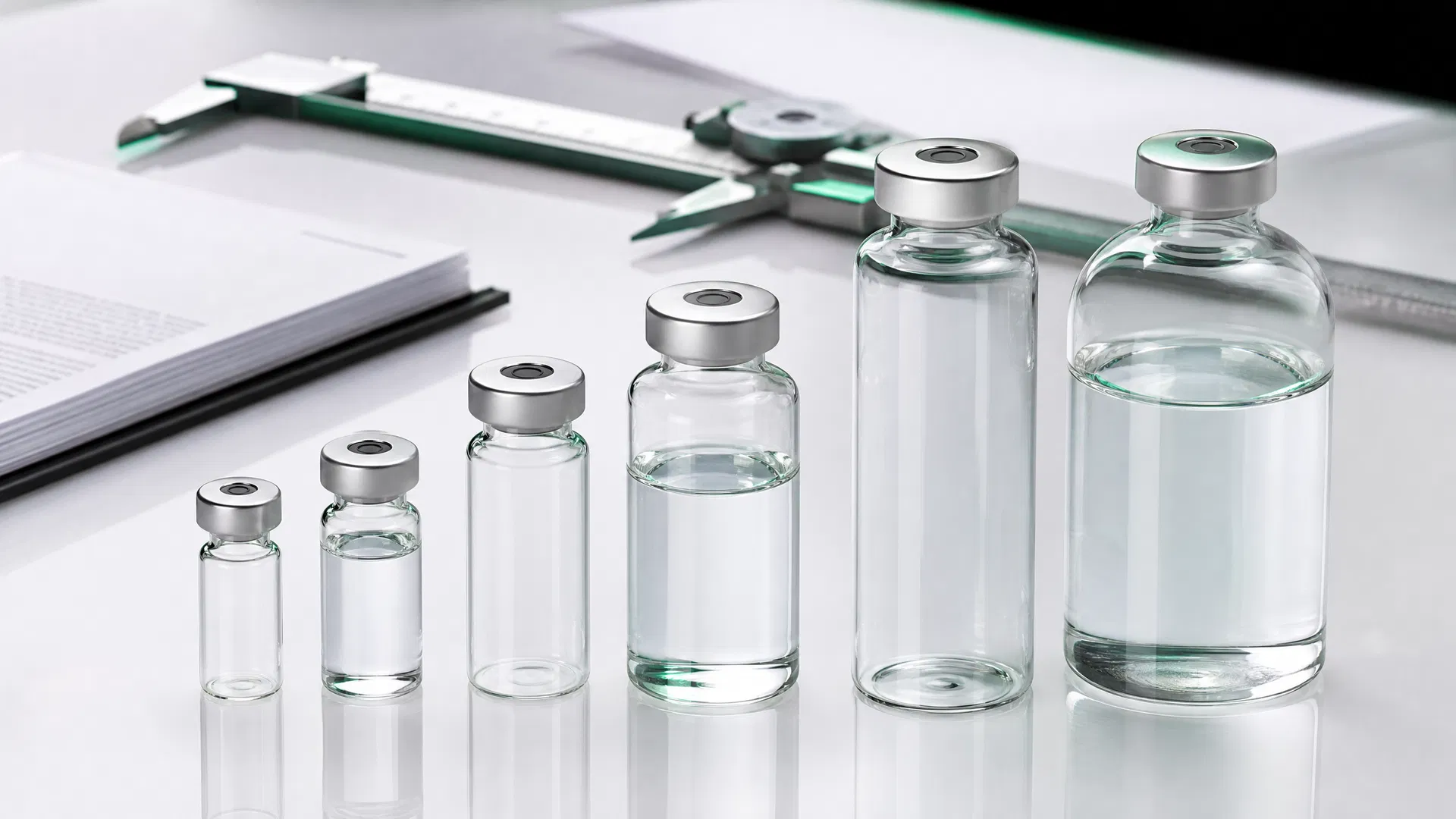
Why Vial Size Selection Matters in 503B Compounding
For 503B outsourcing facilities, choosing the right vial size is not merely a packaging decision — it directly impacts your sterility assurance level (SAL), fill accuracy, waste reduction, and overall cost per unit. The FDA's Current Good Manufacturing Practice (cGMP) guidelines emphasize that container-closure systems must be appropriate for the intended use, and vial sizing is a critical component of that determination.
Key Factors in Vial Size Selection
1. Fill Volume vs. Overfill Requirements
USP <1151> specifies recommended overfill volumes for injectable preparations. For example:
- 2ml vials require approximately 0.25ml overfill
- 10ml vials require approximately 0.5ml overfill
- 50ml vials require approximately 1.0ml overfill
The overfill percentage decreases as vial size increases, meaning larger vials offer better material utilization. However, larger vials also increase the risk of contamination with multi-dose configurations.
2. Headspace and Oxygen Sensitivity
The ratio of headspace to fill volume affects drug stability. For oxygen-sensitive compounds, smaller vials with nitrogen overlay provide better protection. Consider:
- Peptides and biologics: Prefer smaller vials (2–5ml) to minimize headspace
- Stable small molecules: Can accommodate larger vials (10–50ml)
- Lyophilized products: Require specific headspace for reconstitution
3. ISO 8362-1 Dimensional Compliance
All pharmaceutical glass vials must conform to ISO 8362-1 dimensional standards. Key specifications include:
- External diameter tolerances (±0.20mm for most sizes)
- Neck finish dimensions for proper stopper seating
- Wall thickness uniformity for consistent heat transfer during sterilization
4. Automation Compatibility
Your vial filling equipment has specific size ranges it can handle efficiently:
- Compact fillers (40–50 vials/min): Typically optimized for 2R to 20R vials
- High-speed lines (100+ vials/min): May require specific vial geometries
- Changeover time: Standardizing on fewer vial sizes reduces downtime
Recommended Vial Sizes by Application
| Application | Recommended Size | Rationale |
|---|---|---|
| Single-dose injectables | 2R or 5R | Minimizes waste, reduces contamination risk |
| Multi-dose preparations | 10R or 20R | Balances convenience with BUD considerations |
| Large-volume parenterals | 50R or 100R | Cost-effective for high-volume compounds |
| Lyophilized products | 6R or 10R | Adequate headspace for reconstitution |
Cost Optimization Strategies
- Standardize your vial portfolio to 3–4 sizes maximum to reduce inventory complexity
- Negotiate volume pricing with your supplier for your highest-volume sizes
- Consider RTU (Ready-to-Use) vials to eliminate washing and depyrogenation costs
- Evaluate total cost including stoppers, seals, and labeling — not just the vial unit price
Conclusion
The right vial size balances regulatory compliance, operational efficiency, and cost management. Work with your packaging supplier to evaluate your specific compound portfolio and production volumes before committing to a vial sizing strategy.
Core Distro supplies ISO 8362-1 compliant Type I borosilicate glass vials in sizes from 2R to 100R, available in both clear and amber options with RTU and RTS configurations. Contact us for a custom packaging consultation.